Holi is celebrated on the last full moon of the lunar year, marking the transition from winter to spring. In many Indian traditions, this full moon represents the closing of one seasonal cycle and the beginning of another. The night before Holi is marked by a bonfire ritual where people symbolically burn old and unwanted things, representing the idea of letting go of negativity and welcoming renewal.
The following day is known for its vibrant celebration with colours. Families, neighbours, and friends gather to greet each other, apply colours, and share sweets. Beyond its joyful atmosphere, Holi carries deeper cultural, seasonal, and social significance.
For parents, festivals like Holi provide an opportunity to introduce cultural stories, values, and traditions in a way that children can easily understand.
The Story of Prahlad and Holika
One of the most widely known stories associated with Holi comes from the Bhagavata Purana. It tells the story of Prahlad, a young prince who remained devoted to truth and faith despite the anger of his father, King Hiranyakashipu.
The king wanted everyone to worship him instead of the divine, but Prahlad refused. In an attempt to harm him, Hiranyakashipu asked his sister Holika to sit with Prahlad in a fire. Holika was believed to have a special power that would protect her from flames.
However, the story concludes differently. Prahlad remained unharmed while Holika was consumed by the fire. This event symbolized the victory of good over evil and is remembered through the ritual of Holika Dahan on the night before Holi.
For children, this story introduces ideas of courage, honesty, and believing in what is right.
The Significance of Burning the Holika
Holika Dahan is the bonfire ritual observed on the evening before Holi. Communities gather around the fire to remember the story of Prahlad and to symbolise the removal of negativity.
Traditionally, the fire also represented clearing away the past year and preparing for a new seasonal cycle. It was a reminder that every new season brings an opportunity for change and renewal.
For families, this moment provides a meaningful way to explain to children the importance of letting go of negative thoughts and choosing positive actions.
Why Is Holi Called the Festival of Colours
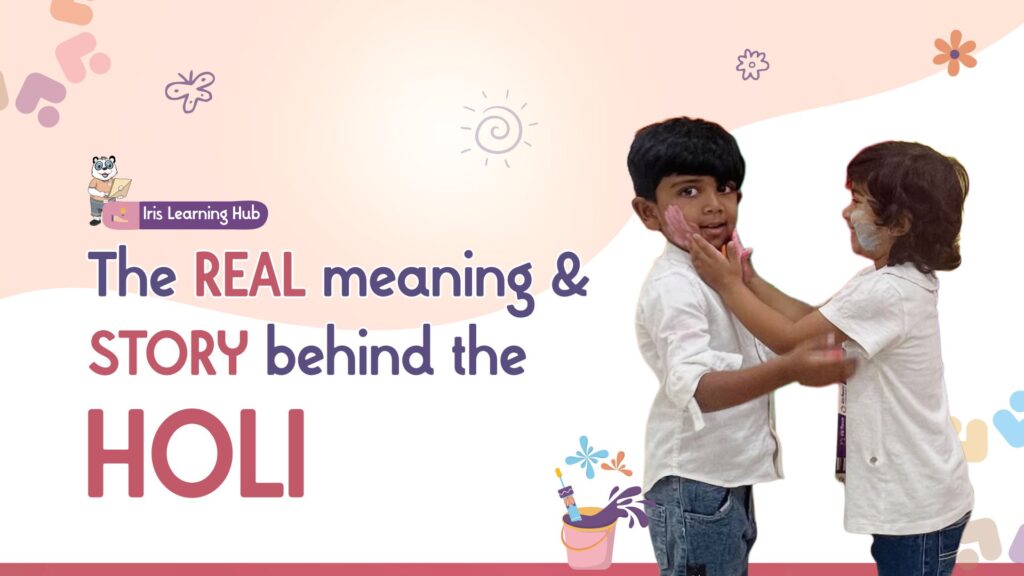
The day after Holika Dahan is when people celebrate with colours. The tradition of applying colours reflects the arrival of spring and the joy associated with seasonal change.
Historically, these colours were made from natural ingredients such as turmeric, flower petals, sandalwood, and herbs. These natural colours were gentle on the skin and connected celebrations with nature.
Colours also represent positivity and friendship. During Holi, people apply colours to one another as a way of greeting, forgiving past differences, and strengthening relationships.
For children, playing with colours becomes a simple way to experience celebration, creativity, and social interaction.
The Significance of Holi
Holi has long been recognised as a festival that brings people together. During the celebration, people greet one another with colours, share food, and spend time with family and friends.
The festival creates an environment where differences of age, profession, or social background are temporarily set aside. The focus shifts to connection, celebration, and community.
Young children often demonstrate this spirit naturally. When children play together, they rarely make distinctions between themselves. Holi reflects this same idea of inclusion and shared joy.
How Is Holi Celebrated At Iris Florets
Holi is celebrated across India as a festival that welcomes the arrival of spring and encourages people to come together in joy and friendship. On this day, families and communities gather to greet one another with colours, share festive sweets, and spend time celebrating with music, laughter, and traditional foods. The playful exchange of colours represents happiness, positivity, and the spirit of togetherness that defines the festival.
For children, Holi is often introduced in a thoughtful and gentle way so they can enjoy the celebration while understanding its meaning. Parents and educators encourage the use of natural colours, organize simple games and creative activities, and share stories that explain why the festival is celebrated and what it represents.
The Iris Florets, cultural celebrations are approached as learning experiences for children. Through storytelling, creative activities, and group participation, children are introduced to traditions in ways that are engaging and meaningful. These experiences help children understand values such as sharing, kindness, and respect while developing curiosity about the world around them.
Holi therefore becomes more than a day of colours. It becomes an opportunity for children to learn about culture, relationships, and the importance of community.