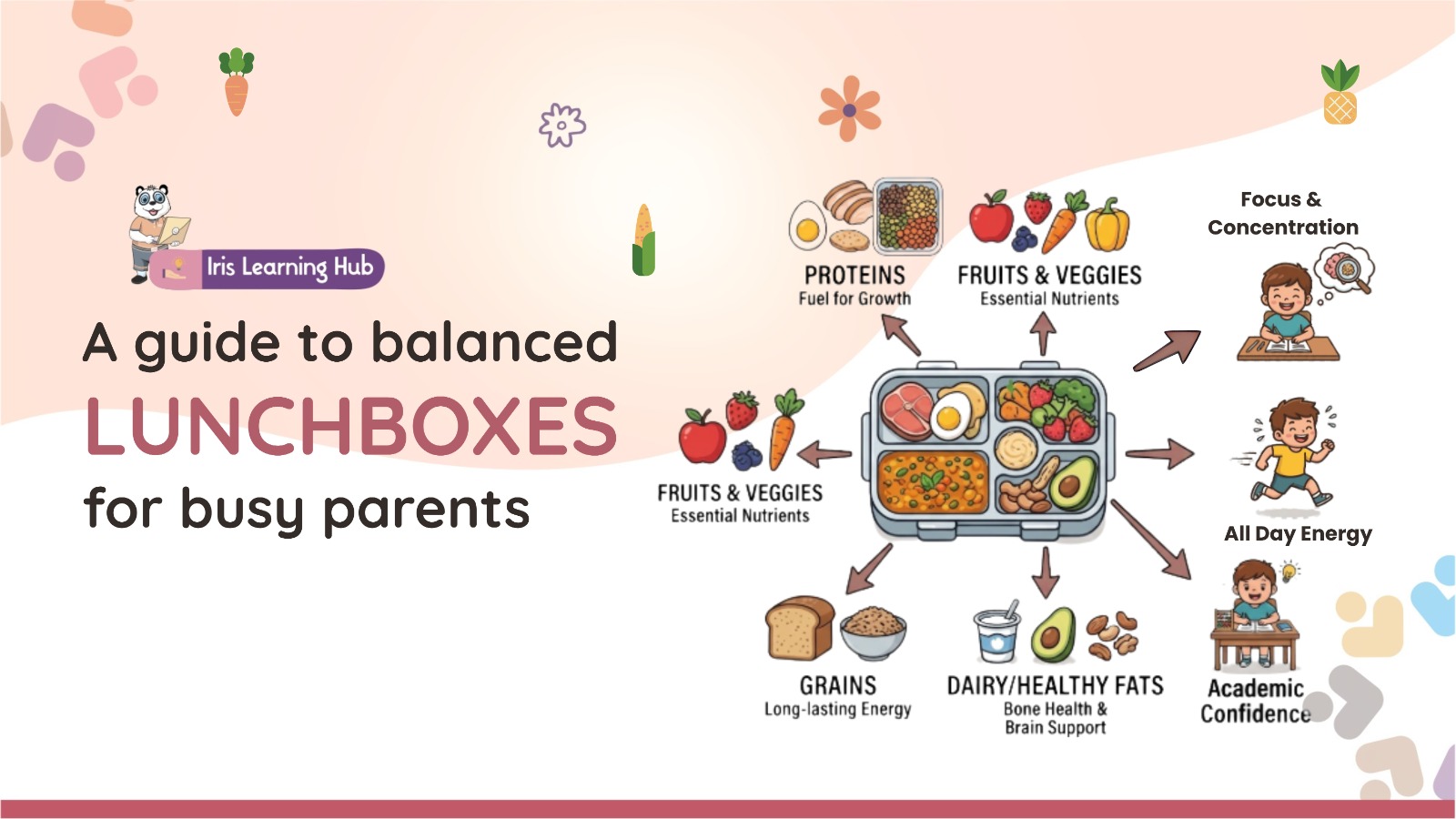
You packed it at 7 am, half-awake, between getting yourself ready and convincing your child to wear shoes. It came back at 4 pm — half-eaten, slightly warm, and quietly judging you. This guide is for that parent.
Here is the uncomfortable truth about most of our preschool lunchboxes: they are filling, but they are not fuelling
There is a difference. A lunchbox full of plain rice, a single sabzi, and a sweet biscuit will stop your child from feeling hungry. But it will not give their brain the protein, iron, healthy fat, and sustained energy it needs to focus, regulate emotions, and actually learn for the next three hours.
And you will see the consequence — not in a report card, but in the 4 pm mood when they come home. The inexplicable meltdown. The inability to tell you anything about their day. The sudden ferocious hunger that no amount of food seems to fix.
We have opened a lot of lunchboxes across our 150+ schools over 30 years. We have also watched closely what happens in classrooms in the 60 minutes after lunch. The correlation between what is in the box and what happens in the afternoon is not subtle. This guide is everything we have learned — made as practical as possible for the parent packing that box at 7 am.
Why the lunchbox matters more than most parents realise
Lunch is not the middle meal. For a preschool child, it is the most important meal of the school day — the one that determines the entire quality of the afternoon.
A child’s brain runs on glucose, but not all glucose is equal. A lunch that delivers a rapid blood sugar spike — white rice, maida, or sugary drinks — produces a crash approximately 45 to 90 minutes later. That crash arrives in the emotional regulation and attention system first. The child who cannot sit still during storytime at 2 pm is not being difficult. They are running on empty.
45%
of preschool lunchboxes in India contain no significant protein source
60–90
minutes between a high-carb lunch and a blood sugar crash in young children
3×
better afternoon focus in children who ate a protein-rich vs carbohydrate-only lunchThe lunchbox is not just food. It is the fuel that determines who your child will be between 1 pm and 4 pm.
| 1 |
A protein anchorThis is the non-negotiable. Every lunchbox needs one protein-rich item that slows glucose absorption, sustains energy, and feeds neurotransmitter production. Without it, everything else in the box is just a temporary fix. Options: a boiled egg, a small katori of dal, paneer cubes, curd, a rajma wrap, or a moong chilla. One of these, every day. This single change, if you make no other, will improve your child’s afternoon more than anything else in this guide. |
| 2 |
A slow-releasing carbohydrateNo carbohydrates — slow carbohydrates. Roti over white bread. Brown rice or millets over white rice alone. A small portion of poha or upma made with vegetables over plain puffed rice. The carbohydrate provides the energy; the protein anchor controls how fast it enters the bloodstream. Together they produce sustained, stable fuel. |
| 3 |
One vegetable — in any form they will eat itThe vegetable does not need to be raw, steamed, or impressive. It needs to be eaten. If your child will only eat carrots if it is grated into their paratha, grate it into the paratha. If they will eat spinach only if it is blended into the dal, blend it in. The mission is consumption, not presentation. One vegetable, in whatever disguise works. |
| 4 |
A fruit, not juiceFruit provides natural sugar, fibre, vitamins, and hydration simultaneously. Juice provides sugar and almost nothing else — the fibre that controls glucose absorption is removed in the juicing process. A small banana, a few grapes, a slice of papaya — any of these, packed as fruit, not processed into a drink |
| 5 |
Water — enough ofMost parents send one small water bottle. Most children need more than it contains. A 4-year-old needs approximately 1.2 to 1.5 litres of water across a full day. Mild dehydration — not thirst, just mild dehydration — impairs attention and amplifies emotional reactivity. They will not tell you they are thirsty. They will tell you with their behaviour. Send a larger bottle. |
A practical 5-day lunchbox plan
Every option below uses what is already in most kitchens and can be assembled in under 10 minutes.| Monday | Tuesday | Wednesday | Thursday | Friday |
|---|---|---|---|---|
|
|
|
|
|
Each day covers all five framework elements: protein anchor, slow carbohydrate, vegetable, fruit, and adequate water. Rotate the week, swap ingredients based on what is available, and within a month you will not be thinking about it consciously anymore. It becomes a system, not a decision.
The most common lunchbox mistakes — and the easy fixes
MISTAKE
Packing the same thing every day because the child accepted it
FIX
Rotate within the same food group. If they like paneer, rotate: paneer paratha Monday, paneer sabzi Wednesday, paneer wrap Friday. Same acceptance, different nutrients.
MISTAKE
Sending fruit juice instead of water, believing it counts as hydration and nutrition
FIX
Juice is sugar water. Send water in the bottle and a whole fruit in the box. Both jobs are done better separately.
MISTAKE
Packing foods that require two hands, tools, or are messy — then wondering why they came back uneaten
FIX
Preschoolers eat what is easy to eat independently. Cut fruit into pieces. Make wraps finger-sized. Pack the dal rice with a spoon already inside it. Reduce the friction, and the food gets eaten.
MISTAKE
No protein at all — lunch is entirely carbohydrate-based
FIX
Even a small addition changes everything. A boiled egg alongside plain rice. A katori of curd alongside roti. A tablespoon of peanut butter on a banana. The protein anchor is the single highest-impact change to any lunchbox.
MISTAKE
Sending hot food in containers that make it unappetizing by lunchtime
FIX
Invest in a good, insulated stainless-steel tiffin. A child who opens a warm, familiar-smelling box eats more than one who opens a cold, congealed version of the same meal. Container quality is an underrated lunchbox strategy.
Your weekly grocery list — the lunchbox staples to always have at home
The biggest obstacle to a good lunchbox is not knowledge — it is not having the right ingredients on a Tuesday morning. Keep these stocked, and the 5-part framework becomes automatic.Protein staples
| Slow carbs
| Fruit rotation
|
Vegetables (easy)
| Iron + brain boosters
| Avoid stocking
|
- A note on ‘avoid’ foods: the goal is not perfection. An occasional biscuit or packaged snack is not going to harm your child.
- The problem arises when these become the default — when the packaged snack fills the gap because nothing else was ready.
- Keep the staples stocked and the healthy default becomes the easy default.
What to do when your child refuses to eat the lunchbox
It happens to every parent. The beautifully packed box comes back untouched. Before you panic, consider two possibilities. First: distraction. Preschool lunch is a social event. Children are talking, watching others, playing with containers – and eating is genuinely secondary. An untouched box on one day is not a nutritional emergency. Make sure breakfast and dinner on those days are solid. Second: the food is unfamiliar or hard to eat independently. If something new appeared in the box, the child may not have touched it purely due to novelty. If the food required two hands or a spoon, they could not manage — it stayed closed. Simplify the mechanics before reconsidering the food itself. What warrants attention is a pattern — a child who consistently returns more than half their lunch uneaten across multiple weeks and is also showing afternoon fatigue or mood changes. That pattern is worth a conversation with your paediatrician and also with your child’s educator, who sees lunchtime directly and often has specific observations.FAQ's

Dal rice is actually a nutritionally reasonable base — it provides carbohydrate, protein, and some iron together. The upgrade is in what you add invisibly: grated carrot or spinach stirred into the dal while cooking, a squeeze of lemon for Vitamin C to improve iron absorption, a small side of curd. You are not fighting the preference — you are quietly enriching it. Over time, introduce one new element at a time alongside the accepted meal. The key is consistency, not pressure.
Reliable eating is genuinely valuable — do not underestimate it. But variety across the week matters for micronutrient coverage. A practical middle ground: keep the format the same but rotate the filling. If your child reliably eats a roti roll, keep the roti roll — but rotate between paneer, egg, rajma, and curd fillings. Same format, different nutrients. The child experiences continuity; the body receives variety.
Temperature is the biggest factor in whether food gets eaten. A good insulated stainless steel tiffin maintains temperature for four to five hours — it is worth the investment. For summer specifically, curd and fruit hold well. Avoid items with coconut that can turn quickly. Pack dal rice in a sealed inner container to retain moisture. If the food smells and looks right when the box opens, the chance of it being eaten increases significantly.
Not necessarily. Post-school hunger is almost universal in preschoolers — a combination of genuine energy expenditure, social distraction during lunchtime meaning they ate less than they could have, and the simple fact that they have been away from home for hours. Check the lunchbox: if it came back largely empty, the issue is likely portion size. If it came back half-full, the hunger is real but they did not eat what was available — worth understanding why. A small, nutritious after-school snack is entirely appropriate.
Note: Please consult your pediatrician or a qualified nutritionist for personalized medical advice or to address specific health concerns before making significant changes to your child’s diet.